


Table of contents
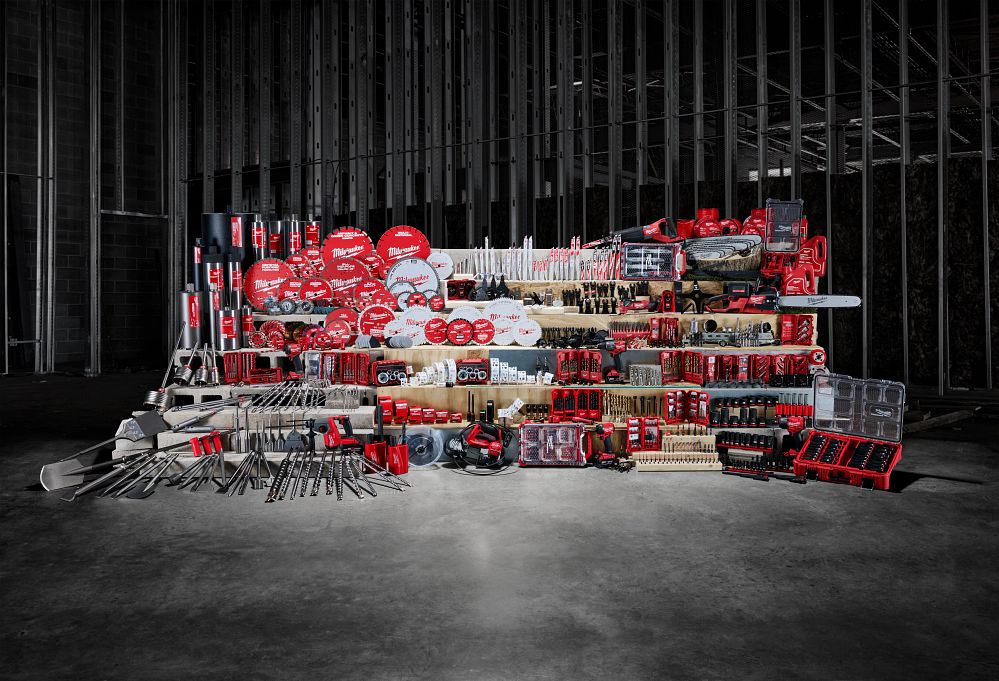
A Milwaukee tool is only as productive as the accessory it's running. The right blade gets you through material in one pass. The wrong bit strips out before the job is done. The correct hole saw size means no rework. Milwaukee has built an accessories lineup that covers virtually every trade application — and the range can be overwhelming if you're trying to figure out what you actually need..
SHOCKWAVE Impact Duty Bits and Driver Sets
SHOCKWAVE is Milwaukee's flagship impact driver accessory line, engineered specifically for use with impact drivers rather than standard drills. The distinction matters. Impact drivers deliver torque in rotational bursts, and a standard bit that works fine in a drill will break, cam out, or wear down much faster under those forces.
The SHOCKWAVE design addresses this with a Shockzone geometry — a section of the shank engineered to flex and absorb the peak torque pulses from an impact driver before they reach the tip. The result is longer tip life and fewer stripped fastener heads.
Model |
Description |
Best For |
SHOCKWAVE Impact Duty Driver Bit Set — 80PC |
Impact drivers, mixed fastener work on commercial jobs |
|
SHOCKWAVE Impact Duty Drill & Drive Set — 60PC |
Combination of drill bits and driver bits in one set |
|
5PC Bit Holder with Carabiner |
Organizing and carrying frequently-used bits on site |
|
SHOCKWAVE 3/8" Threaded Rod Nut Runner |
Strut and conduit support installation |
The 80PC driver bit set (48-32-4094) is the most comprehensive option for crews who run a wide range of fastener types. It covers Phillips, Torx, square, slotted, and hex drive bits, plus nut drivers and a socket adapter — enough variety that you're not reaching for a second set mid-job.
The 60PC Drill & Drive set (48-32-4097) is worth considering for anyone who wants a single kit that handles both drilling and driving. It combines SHOCKWAVE impact driver bits with titanium drill bits, which gives you a legitimate one-kit solution for framing, trim, or light demolition work.
Note: SHOCKWAVE bits are designed for impact drivers but work fine in drills. The reverse is less true — standard drill bits are not optimized for the high-torque cycles of an impact driver and will fail faster.
Hole Saws — Hole Dozer Bi-Metal and Carbide Tooth
Milwaukee's Hole Dozer line is their primary hole saw platform, and there are two meaningfully different tiers within it: standard bi-metal and carbide tooth. The difference is not just price — it's application range and expected tool life.
Bi-Metal Hole Dozers
Bi-metal hole saws combine a hardened tooth edge with a flexible steel body. They're built to cut nail-embedded wood, light sheet metal, aluminum, and standard construction materials. The large slot pattern on Milwaukee's design helps clear debris and dissipate heat, which is one of the main failure modes for hole saws in production use.
Model |
Description |
28-Piece All-Purpose Professional Hole Dozer Hole Saw Kit |
The 28-piece kit (49-22-4185) is the broadest coverage option — it includes a range of saw diameters, quick-change arbors, and pilot bits organized in a durable case. For electricians, plumbers, and general contractors who cut holes in wood framing and light-gauge metal on a daily basis, this is a practical starting point rather than a specialty purchase.
Carbide Tooth Hole Dozers
Carbide-tooth hole saws step up the capability considerably. The 3 TPI carbide tooth design allows these saws to cut materials bi-metal teeth struggle with: stainless steel, fiberglass board, and heavier-gauge metal stock. Carbide also holds an edge significantly longer in abrasive materials, which means fewer saw replacements on longer projects.
The practical decision point between bi-metal and carbide: if your work is primarily wood and light metal, bi-metal is sufficient and less expensive to replace. If you're regularly cutting stainless, fiberglass, or heavy gauge material, the carbide set pays for itself quickly in reduced tool consumption.
Drill Bits — Titanium, Cobalt, and TiN SHOCKWAVE
Milwaukee's drill bit lineup separates into a few distinct categories based on material and coating. Understanding those distinctions helps you avoid buying the wrong bit for the job — and avoids the common mistake of using a general-purpose bit on material it's not rated for.
Model |
Description |
Material Rating |
23-Piece TiN SHOCKWAVE Drill Bit Kit |
Wood, soft metals, and general construction |
Titanium vs. Cobalt
Titanium-coated bits (TiN — titanium nitride) use a high-speed steel core with a titanium coating that extends bit life and reduces friction. They're the right choice for general construction work: wood, soft metals, plastics, and drywall. They're not designed for cast iron or stainless steel.
Cobalt bits are a different material entirely — a high-speed steel alloy with cobalt added to the steel itself, not as a coating. This allows cobalt bits to withstand higher drilling temperatures, which makes them the right choice for hard metals including stainless steel, cast iron, and titanium. Cobalt is more expensive and not the right call for everyday wood drilling, where the cost premium doesn't add value.
"Cobalt bits are designed for hard surfaces such as cast iron, stainless steel, and even titanium. Normally you don't want to use these for general purpose uses. Titanium uses a high-speed steel with a coating of titanium nitride — designed to last much longer and stay sharper longer than standard high-speed steel bits." — Tools In Action — Milwaukee Drill Bit Review
Saw Blades — SAWZALL, Band Saw, and Cut-Off
Milwaukee's saw blade category covers reciprocating saw blades (SAWZALL), band saw blades for portable band saws, and abrasive cut-off wheels. Each has its own selection logic based on material, TPI, and application.
SAWZALL Reciprocating Saw Blades
SAWZALL blade selection comes down to two primary variables: tooth count (TPI) and blade material. Lower TPI removes material faster in wood; higher TPI produces cleaner cuts in metal and slows down in wood. Most commercial and demo work benefits from a mixed inventory rather than a single blade type.
Model |
Description |
Application |
10-Piece SAWZALL Blade Set |
General purpose — mixed materials |
|
M12 HACKZALL Blade 10-Piece General Purpose Set |
Compact reciprocating saw work |
|
6" 24 TPI SAWZALL Blade Metal — 100 Pack |
High-volume metal cutting |
The 10-piece general purpose set (49-22-1110) gives you enough blade variety for a typical service call or renovation job without over-investing in blades you won't use. The 100-pack metal blades (48-01-7186) are for production environments — mechanical, HVAC, or heavy demo crews where blade consumption is high enough that per-unit cost matters.
Band Saw Blades
Milwaukee's band saw blades are designed for their M12 and M18 portable band saws and are available in different TPI ratings for thin and thick metal cutting. Matching TPI to material thickness is the primary selection variable — too few teeth on thin material leads to blade grabbing; too many teeth on thick material causes heat buildup and slow cuts.
Model |
Description |
44-7/8" 8-10 TPI Extreme Thick Metal Bandsaw Blades — 25 Pack (Deep Cut) |
|
Band Saw Blade Pulley Rubber Tire/Belt — 44-7/8" (fits most full-size saws) |
The 25-pack (48-39-0605) is an 8-10 TPI blade in the 44-7/8" length for the M18 FUEL Deep Cut band saw — a bimetal blade rated for thick structural steel, angle iron, and heavy conduit. Buying in packs makes sense for shops or crews doing regular metal fab or mechanical work where individual blade replacement is a recurring cost.
Cut-Off Wheels
Model |
Description |
3" Metal Cut Off Wheel — 3 Pack |
|
Outer Flange Nut for Grinders — 4-1/2", 5" |
|
Grinder Flange Nut Kit |
The 3" cut-off wheels (49-94-3000) are sized for die grinders and compact angle grinders for detail cuts in metal. The flange nut kits and hardware are the kind of replacements that get lost or worn on any busy grinder — stocking spares means you're not stopping work to hunt for a $6 part.
Oscillating Multi-Tool Blades — OPEN-LOK
Milwaukee's OPEN-LOK system is their universal blade mount for oscillating multi-tools. All OPEN-LOK blades use the same interface, which means a blade purchased today works on any Milwaukee oscillating tool — and the system is designed to accept competitor tool arbors with an adapter, though direct compatibility varies by brand.
The blade selection within OPEN-LOK is broad enough that choosing the right one matters more than choosing between competing brands.
Model |
Description |
Application |
OPEN-LOK 9-Piece Multi-Tool Blade Kit |
Wood, metal, grout, scraping — general mixed use |
The 9-piece kit (49-10-9113) covers the most common application range: wood cutting blades, bi-metal blades for metal and nail-embedded wood, scraper blades, and a sanding pad. It's a practical starting kit rather than a specialty purchase.
For flooring work, the Pro-Curve hardwood blades with triple-ground Japanese teeth significantly outperform standard wood blades in both accuracy and cut speed. For tile and grout removal, the diamond grit boot blade offers up to 5x the life of standard carbide grit. Picking specialty blades by application saves both time and money compared to running a general-purpose blade through everything.
Impact Sockets
Standard chrome sockets are not designed for use with impact drivers or impact wrenches. The shock loads from an impact mechanism can crack or shatter standard sockets, which is a safety issue as well as a tool life issue. Milwaukee's impact sockets are manufactured from a chrome-molybdenum alloy (Cr-Mo) with a black phosphate finish, designed specifically to absorb the rotational impact forces without cracking.
The drive size selection (1/4", 3/8", or 1/2") should match the impact tool you're running. Using a 1/2" drive socket on a 3/8" impact wrench with an adapter is workable for occasional use but reduces efficiency and increases wear. Matching drive sizes is better practice.
Model |
Description |
5PK 1" Insert Nut Drivers |
|
9/16" and 3/4" 2-in-1 6PT Socket |
The 2-in-1 socket (49-66-5111) is a practical tool for anyone doing panel work, strut, or conduit support installation where both 9/16" and 3/4" fasteners are common. Running a single socket for both sizes reduces the number of swaps during production work.
Workstation and Equipment Accessories
48-08-0551 Folding Miter Saw Stand
The folding miter saw stand is one of the higher-value accessories in the category for any crew doing site work with a miter saw. The alternative to a proper stand — sawhorses, a tailgate, or the floor — costs you accuracy and speed on every cut.
Model |
Description |
Folding Miter Saw Stand |
Milwaukee's folding stand is compatible with a range of miter saw brands via its mounting system and folds flat for transport. The quick-set leg height adjustment and integrated stop system make it a practical field tool rather than a shop-only piece of equipment.
48-10-5601 Compact Router Plunge Base
The plunge base (48-10-5601) converts Milwaukee's compact router into a plunge-cutting configuration for dado work, mortising, and through-cuts that require a controlled entry point. It's an accessory that significantly extends what the tool can do without requiring a separate plunge router.
Model |
Description |
Compact Router Plunge Base |
|
55" Guide Rail |
The 55" guide rail (48-08-0571) pairs with Milwaukee's track saw system to guide long rip cuts on sheet goods. If you're doing cabinetry, flooring, or structural panel work, the guide rail is what takes the track saw from a capable saw to a precision cutting system.
49-90-1900 HEPA Filter
Dust management is increasingly regulated on construction sites — silica dust exposure requirements in particular have tightened significantly. The HEPA filter (49-90-1900) is a replacement/upgrade for Milwaukee vacuums and dust extractors that upgrades the filtration to HEPA-level capture for fine dust particles including silica.
Model |
Description |
HEPA Filter (vacuum replacement/upgrade) |
|
Replacement Hose |
Maintenance accessories like filters and hoses are the kind of item that gets deferred until a tool stops working. Having replacements on hand eliminates downtime — a vacuum without a functional filter isn't useful on any site that has dust control requirements.
Specialty Accessories Worth Knowing
49-80-0300 Heat Gun Accessory Assortment
Heat guns are commonly used for shrink tubing, paint stripping, pipe thawing, and adhesive removal. The accessory assortment (49-80-0300) includes nozzle attachments that change the airflow pattern for different applications — a concentrator nozzle for targeted heat, a spreader nozzle for even distribution across a surface, and a reflector for pipe work. Using the right nozzle reduces both application time and the risk of heat damage to surrounding materials.
Model |
Description |
Heat Gun Accessory Assortment |
|
Blade Backing Flange |
48-08-0551 Guide Rail vs. Freehand Cuts
One consistent pattern in accessory purchasing: the tools that improve consistency pay dividends far beyond their price. A guide rail on a track saw turns a skill-dependent operation into a repeatable one. A SHOCKWAVE bit set prevents stripped heads. A proper drill bit for the material eliminates redrilling. Accessories that reduce rework are as valuable as the primary tools they support.
How to Pick the Right Milwaukee Accessory
The categories above cover a broad range of applications, but the selection logic applies consistently across all of them:
Match the accessory to the material. Bi-metal hole saws for wood and light metal; carbide tooth for stainless and fiberglass. Titanium drill bits for general use; cobalt for hard metal. High TPI SAWZALL blades for metal; low TPI for fast wood removal
Match the accessory to the tool. SHOCKWAVE bits are designed for impact drivers. Impact sockets are designed for impact wrenches. Running the wrong accessory in the wrong tool shortens both.
Buy for the volume of use. A 100-pack of SAWZALL blades makes sense on a demo crew. A 10-pack makes sense for a service tech. Overbuying accessories you rarely use locks up cash and creates inventory clutter.
Replacement and maintenance accessories matter. A vacuum with a clogged filter, a grinder missing a flange nut, or a band saw with a worn drive belt all stop work. Stocking the critical replacements for your most-used tools is as important as the tools themselves.
Frequently Asked Questions
What makes SHOCKWAVE bits different from standard driver bits?
SHOCKWAVE bits are engineered for use with impact drivers specifically. The Shockzone geometry — a section of the shank designed to flex under load — absorbs the peak torque pulses from an impact mechanism before they reach the tip. Standard bits don't have this feature and will wear out or break faster in an impact driver. SHOCKWAVE bits work in standard drills as well, but the design advantage is most relevant in impact drivers.
When should I use cobalt drill bits vs. titanium?
Cobalt bits are for hard metals — stainless steel, cast iron, high-alloy steels, and titanium. The cobalt is alloyed into the steel itself, which allows the bit to withstand the heat generated when drilling hard material. Titanium-coated bits (TiN) are a high-speed steel core with a coating that extends life in general-purpose applications: wood, soft metals, plastic, and drywall. Using titanium bits on stainless steel will wear them out quickly. Cobalt for metal; titanium for everything else.
What's the difference between bi-metal and carbide hole saws?
Bi-metal hole saws combine a hardened tooth edge with a flexible steel body. They cut wood, light metal, aluminum, and nail-embedded wood well. Carbide-tooth hole saws add tungsten carbide teeth that handle stainless steel, fiberglass, and heavier-gauge material that bi-metal teeth struggle with. Carbide saws also last significantly longer in abrasive materials. For standard wood and light metal work, bi-metal is sufficient. For stainless, fiberglass, or high-volume production cutting, carbide is worth the higher initial cost.
Are Milwaukee OPEN-LOK blades compatible with other brand oscillating tools?
Milwaukee's OPEN-LOK system includes a universal fit interface that accepts blades from most oscillating tool brands via an adapter. However, for optimal performance and secure fit, Milwaukee OPEN-LOK blades are designed to work directly with Milwaukee oscillating multi-tools. Compatibility with other brands varies — check the specific blade and tool combination before assuming a direct fit.
What TPI SAWZALL blade should I use for metal cutting?
Higher TPI (teeth per inch) for metal, lower TPI for wood. For thin sheet metal (under 1/8"), use 18-24 TPI. For structural steel, angle iron, and thick plate, use 8-10 TPI. Running a high-TPI blade in thick material causes the gullets between teeth to load up with chips and overheat; running a low-TPI blade in thin material causes grabbing and blade breakage. The Milwaukee 100-pack 24 TPI blade (48-01-7186) is optimized for high-volume thin metal cutting.