


Table of contents
You show up to a flooded basement after a heavy rain. There's standing water in a trench you need to excavate. A holding tank needs draining before you can start service work. In all of these situations, you need to move water fast and you need to do it without dragging in a generator or a gas-powered pump.
Running on M12 or M18 batteries, Milwaukee's cordless water pump options let you dewater, transfer fluids, and clear standing water on any jobsite without an engine, without exhaust fumes, and without the startup hassle that comes with gas-powered equipment. There are 3 available options, including Milwaukee's M18 transfer pump and M12 transfer pump.
What Is a Transfer Pump and How Does It Work?

A transfer pump moves liquid from one location to another. It uses a motor to create suction at the inlet, which draws water in, then pushes it out through the discharge outlet under pressure. Unlike a high-pressure pump designed to move water over long distances at high pressure, a transfer pump is designed for volume: moving large amounts of liquid efficiently over shorter distances and moderate vertical lifts.
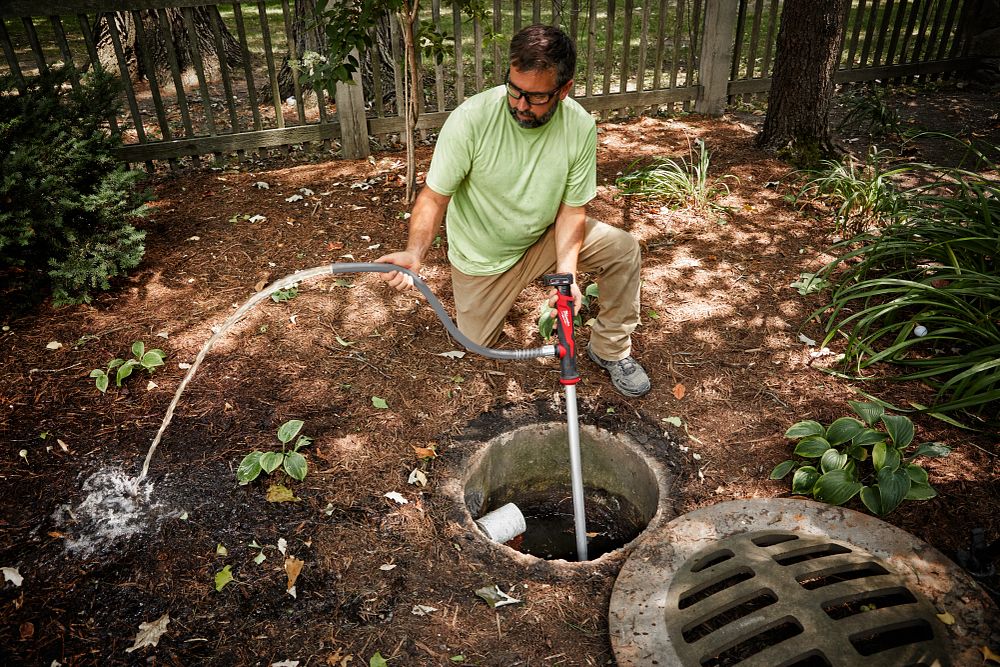
Submersible transfer pumps, which is how all three Milwaukee models work, are placed directly in the liquid being pumped. That means the pump doesn't need to prime itself by drawing water up from below. It's already surrounded by water, which lets it start moving liquid immediately and handle a wider range of fluid levels. You drop it in, connect your discharge hose, and it pumps until the water level drops below the pump intake or until you shut it off.
For trade professionals, transfer pumps are used any time water or another fluid is in the wrong place. Flooded work areas, waterlogged excavations, overfilled tanks, post-rainstorm site recovery, condensate removal, and fluid transfer between containers are all standard applications. Milwaukee water pumps are designed to handle all of these situations on standard battery power.
M12 vs. M18: Which Milwaukee Transfer Pump Do You Need?
Milwaukee offers the 2579-20 on M12 and two M18 models at different output levels. The right choice comes down to how much water you need to move, how fast you need to move it, and what battery platform you're already carrying.
The 2579-20 M12 Stick Transfer Pump runs on M12 and pumps at 330 GPH maximum flow rate. It has a 1/2 inch inlet and outlet, handles solids up to 1/8 inch, and reaches a max lift of 25 feet. The 10-foot power cord gives you flexibility in tight spaces. It's compact, lightweight, and submersible. For electricians, HVAC techs, or any trade professional who carries M12 tools, the 2579-20 is a practical add-on that handles light dewatering and fluid transfer without needing to step up to M18.
The 2771-20 M18 Transfer Pump steps up to 500 GPH maximum flow rate with a 3/4 inch inlet and outlet and handles solids up to 1/4 inch. It's submersible and runs on a single M18 battery. This is the right step up from the M12 model when you're on M18 tools and need more throughput for moderate dewatering tasks like clearing a sump pit, a flooded mechanical room, or a small excavation.
The 2940-20 M18 Brushless Stick Transfer Pump is the top of the lineup. The brushless motor delivers 1,000 GPH maximum flow rate, which is exactly double the 2771-20. It also handles solids up to 5/16 inch and provides longer runtime than the brushed 2771-20 due to the more efficient motor design. For serious dewatering jobs, large fluid transfers, and commercial construction site use, the 2940-20 is the Milwaukee m18 water pump that gets it done fast.
Flow Rate Explained: Why GPH Matters More Than You Think
Gallons per hour is the number that tells you how long a dewatering job is going to take. If you've got 500 gallons of water in a flooded basement and you're running the 2940-20 at maximum flow, you're looking at roughly 30 minutes to clear it. With the 2579-20 at 330 GPH, that same job takes closer to 90 minutes. That's not a small difference on a jobsite where time is money and you've got a crew waiting to get back in.
It's worth understanding that maximum GPH ratings are tested under ideal conditions, meaning clean water, no significant back pressure, and the pump at or near the water surface. Real-world flow rates depend on the discharge hose length, how high the water has to travel to the discharge point, and the condition of the water being pumped. Longer hose runs and higher vertical lift both reduce effective flow rate. For typical trade applications with reasonable hose lengths and modest lift heights, the Milwaukee water pump models perform close to their rated specs.
For planning purposes, the 2940-20 at 1,000 GPH moves roughly 16.7 gallons per minute. The 2771-20 at 500 GPH moves about 8.3 gallons per minute. The 2579-20 at 330 GPH moves about 5.5 gallons per minute. Knowing these numbers lets you estimate job duration before you start and decide whether the M12 model is enough or whether you need the faster M18 brushless pump.
Milwaukee Transfer Pump Models: Full Breakdown
2579-20: M12 Stick Transfer Pump

The 2579-20 is Milwaukee's compact entry in the transfer pump lineup, running on M12 power. It pumps at up to 330 GPH, uses 1/2 inch inlet and outlet connections, and handles solids up to 1/8 inch. The 25-foot max lift spec means it can pump water up from a lower area to a discharge point up to 25 feet higher, which covers most basement and crawl space dewatering situations. The 10-foot power cord gives you reach in tight spaces without having to position the battery right at the water line. It's fully submersible, so you drop it directly into the water and let it run.
2771-20: M18 Transfer Pump

The 2771-20 runs on a single M18 battery and delivers 500 GPH maximum flow rate through 3/4 inch inlet and outlet connections. The larger port size compared to the M12 model allows higher flow volume. It handles solids up to 1/4 inch, which covers most typical dewatering situations involving light debris, silt, or fine particles in the water. The pump is submersible and built for the same kinds of applications as the M12 model but at higher throughput. At 500 GPH, this is a capable tool for flooded mechanical rooms, small-to-medium excavations, sump pit dewatering, and fluid transfer between containers.
2940-20: M18 Brushless Stick Transfer Pump

The 2940-20 is the top model in Milwaukee's transfer pump lineup and represents a significant step up from the 2771-20. The brushless motor delivers 1,000 GPH maximum flow rate, double the brushed M18 model, and handles solids up to 5/16 inch, which covers more demanding conditions where debris, gravel fines, or heavier silt may be present in the water. The brushless motor also runs more efficiently than brushed designs, which translates to longer runtime per battery charge. The 3/4 inch inlet and outlet carry over from the 2771-20. For contractors and trade professionals who rely on their Milwaukee M18 transfer pump for heavy dewatering work, the 2940-20 is the model that handles the most demanding job conditions.
Table 1: Milwaukee Transfer Pump Comparison
|
Model |
Platform |
Flow Rate (GPH |
Max Lift |
Solids Capacity |
Submersible |
Best Use |
|
2579-20 |
M12 |
330 GPH |
25 ft |
1/8 in |
Yes |
Light dewatering, M12 users, tight spaces |
|
2771-20 |
M18 |
500 GPH |
N/A published |
1/4 in |
Yes |
Moderate dewatering, flooded spaces, sump pits |
|
2940-20 |
M18 Brushless |
1,000 GPH |
N/A published |
5/16 in |
Yes |
Heavy dewatering, construction sites, large volume transfer |
Milwaukee Transfer Pump Trade Applications: Who Uses These and How

The Milwaukee water pump lineup shows up across multiple trades on different types of jobs. Here's how specific trades are putting these tools to work.
Plumbers
Plumbers deal with water in places it shouldn't be on a regular basis. Flooded basements after pipe failures, standing water in crawl spaces before repair work, water in pit areas before rough-in inspections. A Milwaukee transfer pump on M18 lets a plumber clear these spaces quickly without setting up a gas pump or running extension cords to a corded electric model. The 2940-20 is the fastest option for clearing large flooded areas before service work can begin. For service plumbers who already carry M18 tools for press fittings and other equipment, the transfer pump is a natural addition to the service van.
HVAC Technicians
HVAC work involves condensate removal, cooling tower service, and drain pan cleaning, all of which require moving water or fluid out of equipment or mechanical spaces. The 2579-20 M12 model is practical for HVAC use because it's compact, runs on M12 batteries that HVAC techs often carry, and handles the lower volume requirements of condensate and drain pan work. For larger cooling system service or dewatering mechanical rooms after flooding events, the 2940-20's 1,000 GPH throughput gets the job done faster.
Construction and General Contractors

Construction sites deal with water constantly, from spring rains filling excavations to burst water lines flooding a floor to post-storm site recovery. The Milwaukee M18 transfer pump, and especially the brushless 2940-20, handles the dewatering work that keeps a construction schedule moving. Clearing a footing excavation after rain, pumping a basement out before concrete work, draining a utility trench before pipe installation, these are all situations where a cordless pump at 1,000 GPH gets you back on schedule faster than waiting for conditions to improve on their own.
Landscapers
Landscapers deal with standing water in ponds, water features, holding tanks, and rain-saturated planting areas. Moving water between containers during pond cleanouts, draining a decorative pond for liner repair, transferring irrigation tank water, all of these are straightforward jobs for a Milwaukee water pump. The 2579-20 M12 model handles smaller water feature work well. For larger transfers and faster work on commercial properties, the 2940-20 moves water twice as fast as the mid-tier M18 model.
Electricians and Other Tradespeople
Electricians, low-voltage contractors, and other trade professionals sometimes encounter flooded utility spaces, basement mechanical rooms, or crawl spaces that need to be cleared before work can begin. Having a Milwaukee transfer pump on the truck means they don't have to stop work and wait for conditions to improve or call in a specialty service for a simple dewatering job. The M12 model is the right size for this use case, fitting cleanly into an M12 tool inventory that electricians commonly carry.
How to Set Up a Milwaukee Transfer Pump on the Job
Setting up a Milwaukee cordless transfer pump is straightforward, but doing it right makes the job go faster and protects the pump over the long run.
- Connect the discharge hose to the pump outlet before placing the pump in water. Make sure the connection is secure.
- Route the discharge hose to where the water needs to go. A longer hose run reduces flow rate, so keep it as short as practical.
- Place the pump in the water. All three Milwaukee models are submersible, so the pump body should be fully in the water for best performance.
- Install a charged battery and turn the pump on. It starts pumping immediately since it's already submerged.
- Monitor the water level as it drops. When the water level falls below the pump intake, the pump will lose prime and performance will drop. Turn it off before it runs completely dry.
- After use, rinse the pump with clean water before storage, especially if you pumped water with silt, debris, or sediment.
For longer jobs where you're running the pump for extended periods, rotate batteries to keep the operation continuous. Higher-capacity M18 batteries extend runtime significantly on the 2771-20 and 2940-20 models, and the brushless motor in the 2940-20 makes the most efficient use of that battery capacity.
Hose and Accessory Considerations for Milwaukee Transfer Pumps

The transfer pump is only part of the system. Getting water from where it is to where you need it requires the right hose setup.
The 2579-20 uses 1/2 inch connections. Standard garden hose fittings typically work for this model, and many plumbers and contractors already carry short lengths of flexible hose that fit. The 2771-20 and 2940-20 use 3/4 inch connections, which are a common size in irrigation and landscape supply hose. Having the right adapters and hose lengths on hand before you arrive at the job saves time on setup.
For discharge, a 50-foot garden hose run is usually sufficient for most jobsite dewatering situations. For longer runs, remember that each additional 10 feet of hose adds friction loss and reduces effective flow rate. If you need to move water a long horizontal distance, keep the hose diameter at least as large as the pump outlet to minimize restriction.
Strainer screens help keep larger debris out of the pump inlet and protect the impeller. The rated solids handling specs (1/8 inch for the M12, 1/4 inch for the 2771-20, 5/16 inch for the 2940-20) describe what the pump can pass without damage under normal conditions. For water with heavy silt or debris loads, strainer accessories at the inlet extend pump life and prevent clogging mid-job.
The Right Milwaukee Transfer Pump for the Job
Whether you're clearing a flooded basement, dewatering a trench before pipe installation, draining a tank for service work, or handling post-storm site recovery, the Milwaukee transfer pump lineup has a cordless option that fits. The 2579-20 M12 is the compact, lightweight choice for M12 users handling light-duty transfer work. The 2771-20 M18 steps up the flow rate for moderate dewatering on M18 battery power. The 2940-20 M18 Brushless is the top of the lineup at 1,000 GPH, with a more efficient motor, longer runtime, and higher solids capacity for the most demanding jobs.
For trade professionals who already run Milwaukee M18 tools, adding a Milwaukee M18 water pump to the kit means one more job that gets handled with the same battery you're already carrying. No generator to haul in, no gas engine to start, no exhaust fumes in confined spaces. Just drop it in, connect the hose, and move the water.
Frequently Asked Questions: Milwaukee Transfer Pumps
What is the flow rate of the Milwaukee M18 transfer pump?
The flow rate depends on which Milwaukee M18 transfer pump model you're using. The 2771-20 M18 Transfer Pump delivers a maximum flow rate of 500 GPH. The 2940-20 M18 Brushless Stick Transfer Pump delivers 1,000 GPH maximum flow rate, which is exactly double the 2771-20. The M12 model, the 2579-20, pumps at up to 330 GPH. For the fastest dewatering performance in the Milwaukee cordless lineup, the 2940-20 is the answer.
Can the Milwaukee transfer pump run dry?
Milwaukee's transfer pump models are submersible and designed to operate in water. Running the pump completely dry, meaning without water flowing through it, can cause the pump to overheat and damage the impeller and motor over time. You should monitor the water level during use and shut the pump off when the water drops below the intake. The pump may cycle on and off or lose prime as the water level drops near the end of a dewatering job, which is a signal to stop the pump before the water is completely gone. Allowing brief moments without water during the final drawdown is generally not damaging, but sustained dry running should be avoided.
What size solids can the Milwaukee transfer pump handle?
The solids handling capacity varies by model. The 2579-20 M12 Stick Transfer Pump handles solids up to 1/8 inch. The 2771-20 M18 Transfer Pump handles solids up to 1/4 inch. The 2940-20 M18 Brushless Stick Transfer Pump handles solids up to 5/16 inch, the largest in the lineup. These specs describe what the pump can pass without damage under normal operation. For water with heavy silt, sand, or debris content, a strainer at the pump inlet helps protect the impeller and extends the life of the pump regardless of which model you're using.
How long does a Milwaukee M18 battery last on a transfer pump?
Runtime depends on the battery capacity, the model being used, and the conditions of the job. On the 2940-20 M18 Brushless model, an M18 REDLITHIUM XC5.0 battery can run the pump for approximately 45 to 60 minutes of continuous operation under typical conditions. The brushless motor in the 2940-20 is more efficient than the brushed motor in the 2771-20, so it gets more work done per battery charge. Higher-capacity batteries like the M18 REDLITHIUM HIGH OUTPUT HD12.0 extend runtime significantly. For longer dewatering jobs, having spare charged batteries on hand ensures continuous operation without stopping.
Is the Milwaukee transfer pump submersible
Yes. All three Milwaukee transfer pump models are submersible. The 2579-20 M12 Stick Transfer Pump, the 2771-20 M18 Transfer Pump, and the 2940-20 M18 Brushless Stick Transfer Pump are all designed to operate fully submerged in the liquid being pumped. This is what allows them to start pumping immediately without priming and to handle low water levels efficiently. The battery and control components remain above the water line during use, either held up by the pump body design or positioned clear of the water through the tool's construction.