


Table of contents
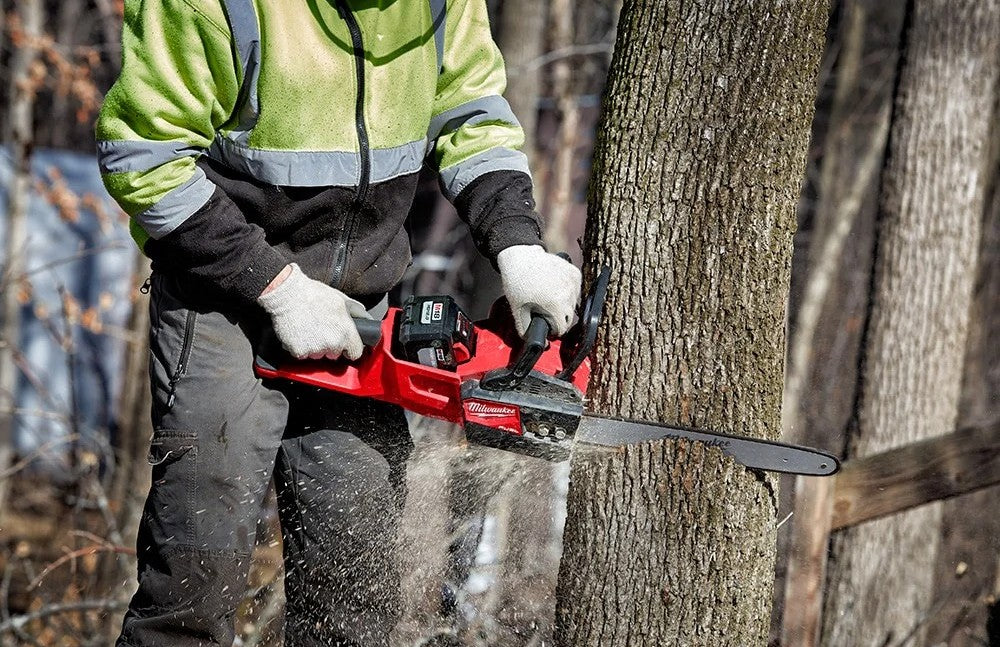
Milwaukee's M18 FUEL cordless chainsaws have changed the game for contractors, landscapers, arborists, and property maintenance crews. They run on the same battery platform you might already be using for your drill, impact driver, or circular saw. That means one battery ecosystem, less time managing separate tools, and more time cutting.
In this guide, we'll break down everything you need to know about Milwaukee's chainsaw options, from compact top-handle models to heavy-duty 20-inch rear-handle saws. We'll cover bar lengths, chain specifications, runtime expectations, and which models work best for different trades and applications.
Why Go Cordless with Milwaukee Chainsaws?

Switching from gas to battery-powered tools isn't just about convenience. Milwaukee's M18 FUEL chainsaws deliver real advantages on the job. There's no mixing fuel and oil, no pulling a starter cord fifty times on a cold morning, and no dealing with stale fuel gumming up your carburetor over the winter. You grab the saw, check the battery level, and go to work. The brushless motors deliver consistent power throughout the charge cycle. You're not losing cutting speed as the gas engine gets tired.
M18 batteries are built on lithium-ion technology that holds a charge well, even in cold weather. And since you're likely already running other M18 tools, you've got batteries ready to swap. That's a real advantage on multi-hour jobs. You can rotate batteries, keep one charging while you're working, and never stop cutting. Gas saws will always have a role in heavy timber work and all-day felling, but for the majority of trade work, cordless gets the job done faster and cleaner.
Understanding Bar Length and Cutting Capacity

Bar length matters more than most people think. It's not just about what looks good or feels comfortable. The bar length determines what diameter wood you can cut in one pass, how easy the saw is to maneuver, and how much battery power you'll use per cut. A longer bar doesn't automatically mean a better saw. For tree work and detail cutting, a shorter bar is lighter, faster through the cut, and less fatiguing. For ground-level work and general construction cleanup, a longer bar cuts through thick branches and logs in fewer passes.
12-Inch Bar: The Arborist's Choice
The 12-inch bar (Milwaukee 2826-20C) is designed specifically for tree work. It's the lightest Milwaukee chainsaw at just 6.6 pounds without a battery. If you're limbing branches from a ladder, working in tight spaces, or doing detail cuts around structures, this is your tool. The short bar means you've got precise control and quick acceleration through the cut. You can get the saw positioned and through the branch faster than a longer saw. It's built for speed and finesse, not raw cutting capacity.
14-Inch Bar: Versatile and Nimble
The 14-inch top-handle models (2826-20T and 2826-22T) hit a sweet spot. They're long enough to handle most branch work and small limbs in one or two passes, but they're still compact enough to use one-handed or from awkward positions. If you're doing storm cleanup, trimming overhanging branches, or general landscaping work, the 14-inch bar is probably your best bet. It's more versatile than the 12-inch while staying much lighter than a rear-handle saw.
16-Inch Bar: Designed for Ground-Level Cutting
Milwaukee's 16-inch rear-handle models (2727-20 and 2727-21HD) are designed for ground-level cutting. You'll handle logs, thick branches, and construction debris with this setup. The rear-handle design gives you two hands on the saw for control and stability. The 16-inch bar cuts through most materials you'll encounter on a typical construction or landscaping site in one or two passes. These saws are the most popular for general contractor work.
20-Inch Bar: Maximum Cutting Capacity
The 20-inch dual-battery model (2827-22) is Milwaukee's heavy hitter. Two M18 batteries power this saw simultaneously through a dual-battery port. You're getting the cutting power to handle larger diameter logs and thick timber in a single pass. This is the choice for contractors who need to fell trees or process significant amounts of wood. The dual-battery setup means you've got extended runtime and more power throughout the charge cycle.
Top Handle vs. Rear Handle: Know Your Style
The way a chainsaw is gripped and balanced changes everything about how you use it. Milwaukee offers both styles because different jobs demand different approaches. Top-handle saws are smaller and lighter, designed for one-handed work from ladders, climbing stands, or tight spaces. Rear-handle saws put both hands on a longer body, giving you control and power for two-handed cutting at chest or waist height. Understanding which style you need will save you money and frustration.
Top Handle: Precision and Reach

Top-handle chainsaws put the weight of the saw on a shoulder strap rather than your arms. The grip is compact, and the saw is meant to work on your right side (or left, depending on orientation). You'll use these for tree work, limbing, and detail cutting. They're ideal when you're at height or reaching around obstacles. A top-handle saw in one hand leaves your other hand free to hold a branch, balance against a ladder, or manage ropes. The shorter bar means faster acceleration through the cut and less strain. If you're climbing, trimming, or doing anything above your head, go with top-handle.
Rear Handle: Power and Stability
Rear-handle chainsaws are the traditional design. You grip with both hands on opposite ends of the body, the bar extends forward, and you push the saw through the cut. This gives you maximum control and leverage. You can apply real downward pressure on thick logs. The saw stays in front of you, which is safer and more comfortable for extended cutting sessions at ground level. If you're standing at a work surface cutting wood, a rear-handle saw is your best tool. You get two hands on the tool, you can brace it against your body, and the bar length gives you real cutting capacity. These are the saws you'll see contractors using most often.
Table 1: Milwaukee M18 FUEL Chainsaw Lineup
Model |
Bar Length |
Handle Style |
Chain Pitch |
Best Use |
Battery Setup |
|
2826-20C |
12" |
Top Handle |
3/8" Low-Profile |
Tree work, arborist, detail cuts |
Single M18 |
|
2826-20T |
14" |
Top Handle |
.325" Low-Profile |
Storm cleanup, branch trimming, landscaping |
Single M18 |
|
2826-22T |
14" |
Top Handle Kit |
.325" Low-Profile |
Storm cleanup, branch trimming, landscaping |
2x M18 Batteries |
|
2727-20 |
16" |
Rear Handle |
.325" |
General construction, ground-level cutting |
Single M18 |
|
2727-21HD |
16" |
Rear Handle Kit |
.325" |
General construction, ground-level cutting |
1x M18 XC8.0 |
|
2827-22 |
20" |
Rear Handle Dual |
.325" |
Timber felling, large logs, heavy-duty work |
2x M18 Batteries |
Chain and Bar Specifications: What You're Actually Cutting
Chain pitch and bar length work together. Pitch is the spacing between chain links, and it matters because it affects how aggressive the saw cuts and how much power it requires. Milwaukee uses .325-inch and 3/8-inch low-profile chains on their M18 lineup. Low-profile chain is gentler on the saw and the user, which is perfect for cordless saws running on batteries. You're not getting as wild a feed rate, but you're getting smooth, efficient cutting that won't drain your battery as fast. The bar is the steel guide that the chain rides on. Longer bars allow for thicker cuts, but they're heavier and require more power to turn the chain. The key is matching your bar length to your intended use.
Runtime and Battery Performance: Real-World Expectations
One of the most important questions people ask is: how long does a battery last? The answer depends on several factors. What battery you're using, how thick the wood is, and whether you're cutting continuously or in bursts all affect runtime. Milwaukee publishes conservative estimates.
The 16-inch models running on a REDLITHIUM XC8.0 battery can deliver approximately 140 cuts through a 4-inch diameter log. The 14-inch top-handle models can make about 150 cuts on a single XC5.0 battery. These are good baseline numbers, but real-world cutting is usually in bursts. You make a few cuts, reposition, make more cuts, check your work. That means a single battery often lasts much longer than the published cut counts. If you're doing construction cleanup, demolition work, or general contractor duties, a single M18 battery usually gets you through several hours of work. For all-day production jobs, having a second battery charging while you work is a smart move.
Single Battery vs. Dual Battery Setup
The 20-inch dual-battery model (2827-22) has a significant advantage in power and runtime. Two M18 batteries feed power to the motor simultaneously. You're getting more torque, more consistent cutting speed, and longer runtime before the batteries reach critical depletion. If you're felling trees or processing large amounts of timber, the dual-battery setup is worth the investment. For typical contractor work, a single-battery saw is sufficient and lighter to handle.
Trade Applications: Which Saw for Your Job?

Arborists and Tree Care Professionals
If you're climbing trees or working at height, the 12-inch top-handle model (2826-20C) is designed for you. It's light, it's precise, and it works great in tight spaces. You'll make quick work of limbing, and the compact design is perfect for one-handed operation. Many arborists carry one on their belt all day, along with a powered lift or climbing gear. The fact that it runs on M18 means you can sync it with your other cordless tools on site.
General Contractors and Demolition
If you're cleaning up after a storm, tearing down old walls, or handling construction debris, the 16-inch rear-handle models (2727-20 or 2727-21HD) are your go-to. They're powerful enough to cut through nail-embedded wood, they balance well for extended use, and the bar length handles most materials in one or two cuts. The rear-handle design gives you leverage and control.
Landscapers and Property Maintenance
For landscaping and property maintenance work, the 14-inch top-handle models (2826-20T or 2826-22T) split the difference between the compact 12-inch and the heavier rear-handle options. You get enough cutting capacity for most trimming and storm cleanup work, but the weight and balance are still conducive to one-handed operation. If you're moving between multiple properties in a day, the 14-inch top-handle is fast and efficient.
Timber Operations and Felling

If you're a timber contractor, property owner managing land, or doing significant tree felling, the 20-inch dual-battery model (2827-22) is your tool. The 20-inch bar and dual-battery power give you cutting capacity similar to a gas saw for many applications. You can fell trees and process them on site without a trailer-mounted mill. The runtime from two batteries is substantial, and the dual power feed keeps the motor spinning at full speed even under load
Maintenance and Care: Keeping Your Saw Running Strong
Maintenance is simpler with a cordless saw than a gas model, but it still matters. You don't have to mix fuel, change spark plugs, or clean a carburetor. But you do need to keep your chain sharp and properly tensioned. A dull chain is dangerous and requires more battery power to cut. Check tension before each use. If the chain sags more than a quarter-inch from the bar, tighten it. A sharp chain will pull itself into the cut. A dull chain will wander and burn through battery fast.
Keep the air filter clean. It's usually accessed by removing a few bolts. A clogged filter reduces cutting power and can cause the motor to stall. Bar oil is another essential item. Even though the chain is battery-powered, it still needs oil for lubrication. Milwaukee recommends checking the oil level before extended cutting sessions. If you're cutting through dirty or sandy material, the bar gets less oil spray, so keep checking. For storage, remove the battery, leave the spark plug well-ventilated, and store in a cool, dry place. Unlike gas saws, you don't need to drain the fuel system or run the motor dry.
The Right Milwaukee Chainsaw for You
Milwaukee's M18 FUEL chainsaw lineup gives you real choices. Whether you're climbing trees and doing detail work, handling construction cleanup, managing landscaping properties, or processing timber, there's a model built for your job. The 12-inch top-handle is light and precise. The 14-inch top-handle balances reach and weight. The 16-inch rear-handle is the workhorse for most contractor applications. The 20-inch dual-battery is the heavy hitter.
All of them run on the same battery ecosystem, so you're building a tool platform that grows with your business. No mixing fuel, no starting ritual, no carburetor maintenance. You grab the saw, grab a battery, and get to work. That's the real advantage of going cordless.
Frequently Asked Questions
Can I use my existing M18 batteries with any Milwaukee chainsaw?
All Milwaukee M18 chainsaws use standard M18 batteries. If you already own M18 tools, your batteries are compatible. The dual-battery model (2827-22) uses two batteries simultaneously, but regular 16-inch and 14-inch models run on a single battery. Charging is the same across all M18 platforms.
How much does a bar and chain cost for replacement?
Replacement bars and chains vary based on length and specification. A 16-inch replacement bar and chain costs significantly less than you'd pay for a gas saw replacement. Since we don't discuss pricing, check current availability with retailers like RedToolStore. The important point is that replacement parts are readily available and not specialized to Milwaukee.
Can I use a Milwaukee chainsaw in cold weather?
Yes. M18 REDLITHIUM batteries perform better in cold than traditional lithium batteries. They've been tested down to near freezing. You won't get as many cuts per charge in very cold conditions, but the saw will start and run. Winter jobs are completely doable. Bring a spare battery and keep it warm. A battery in your jacket pocket stays warmer and delivers more power than one sitting in the tool bag.
What's the difference between bare tool and kit models?
Bare tool means you get just the saw, no battery or charger. Kit models include batteries and a charger. If you already own M18 batteries and a charger, buy the bare tool. If you're new to the M18 ecosystem, the kit is the better value and makes sense as your first purchase.
Can a cordless chainsaw handle wet or frozen wood?
Yes, but with caveats. Wet wood cuts slower than dry wood and uses more battery power. Frozen wood is significantly harder to cut and will drain your battery faster. If you're working in winter or with freshly cut green wood, expect lower runtime and plan for additional batteries or charging time. The brushless motor on Milwaukee saws is powerful enough for these conditions, but physics doesn't change. Harder material requires more work.